


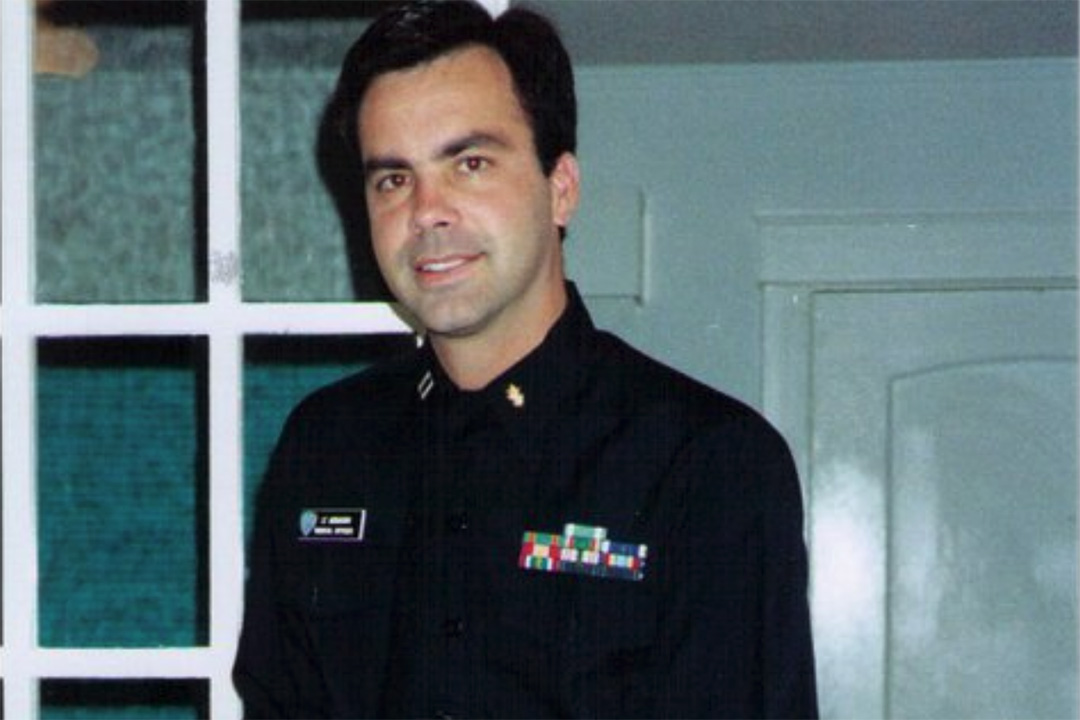
Victor Abraham – Navy doctor and veteran of the first Gulf War
After earning his undergraduate and medical school degrees from Temple University, Victor Abraham ’82 faced the challenges of residency and the realities of mounting student debt. He decided to enlist in the Navy to take advantage of a program to help him finance medical school.
A native of Puerto Rico, he was happy to serve his country, following in the footsteps of his father who was an Air Force officer. That sense of duty would take him to a war zone.
Deployment to the Gulf War
Victor was assigned to sea duty for two years, including a 9-month deployment in the Persian Gulf for Operations Desert Shield and Desert Storm.
He served as the medical officer on the USS Germantown, a ship that transports and launches landing craft and amphibious vehicles with embarked Marines in support of amphibious assaults.
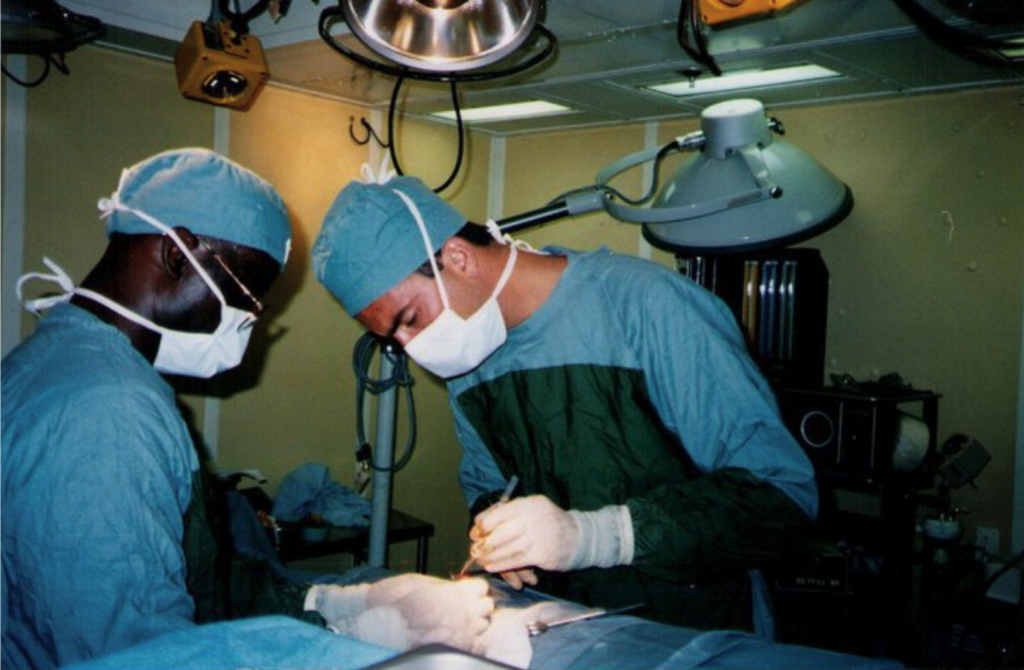
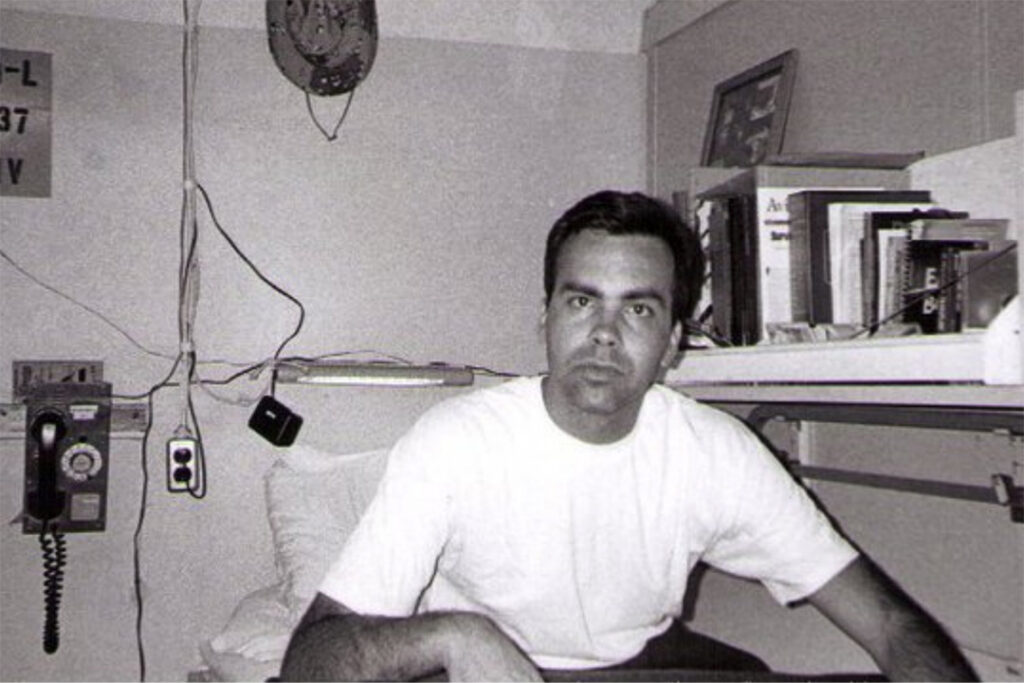


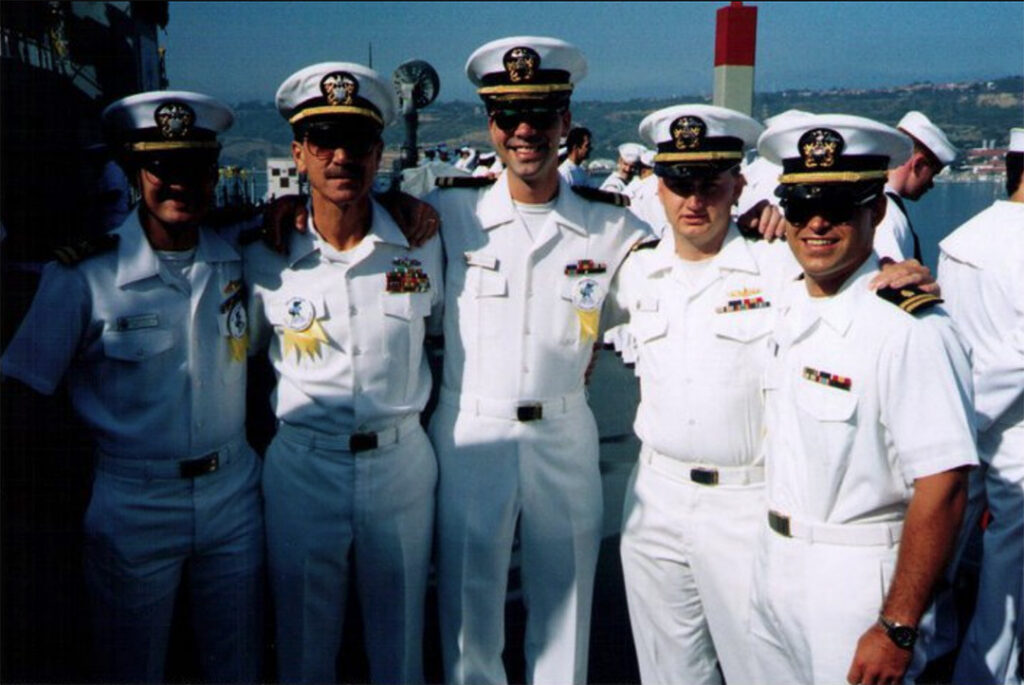

Victor was pretty green as the ship’s medical officer, having only one year of general surgery under his belt, but he was tasked with managing the sick bay with six Navy corpsmen and a dental officer. He said of his day to day duties, “I took care of 700 Sailors and Marines, treating everything from drippy noses to drippy (other places) to trauma.”
Thankfully, because the ground war was over quickly, there were few casualties. Victor said that most injuries that he treated were a result of training mishaps and on-ship injuries.
His biggest challenge as a Navy doctor was when a young sailor developed appendicitis. Victor said, “We had an anesthesia machine, but nobody knew how to run it. Between me, the dentist, and the corpsman, we gave him IV sedation with morphine and Valium, and then I just numbed my way down and took out his appendix.”
Among the battles that Sailors and Marines had to face was the “hurry up and wait” boredom of being deployed for so long. Victor said, “The Marines were always grateful to the doctors taking care of them, so they let me shoot all their guns. That was a blast.”
From Pollywog to Trusty Shellback
In his deployment, Victor experienced the “Crossing the Line” ceremony, a centuries-old Navy tradition celebrating a ship’s crossing of the equator. Uninitiated crew, called pollywogs, undergo rites of passage by veteran shellbacks before being initiated into the “Ancient Order of the Deep.”
Officers are not spared the indignity. Victor said, “You wear your pants inside-out and backwards with underwear on the outside, and you crawl around on the deck through muck, getting symbolically whacked by Sailors and big Marines.”
He took offense at one Marine who really let him have it, and joked, “I told the corpsman to find his shot record and throw it overboard so he has to get all his vaccines again.”
Ironically, that same Marine showed up in his sick bay later that day with a hand fracture from a scuffle with another Marine. Victor treated him without a painkiller. He said, “The next day when we talked about his treatment, I found out that he was a Golden Gloves boxer from Philadelphia. We became friends from that moment on. And when I treated him further, I gave him something to numb the pain.”
Victor developed close friendships in the service and met some great people. He said he’s still in contact with his former commanding officer.
Civilian Doc
Victor chose urology as his specialty after a rotation at Naval Hospital San Diego. He said, “The residents there all seemed pretty well-rested and happy. The urology guys were happy-go-lucky guys, joking around, who could sleep at night. I didn’t see that in orthopedics. So, that’s how I ended up doing Urology. He went on to complete a 6-year residency at Duke.

He became a successful urologist in a practice in Wilmington, North Carolina, and recently retired.
He enjoyed his Pilam experience
Victor was serious about his college education, but after he attended a legendary PA Alpha Delta summer party, hosted when freshmen were receiving their Temple orientation, he decided to join. He said, “I wasn’t the only one. There were 17 guys in my pledge class.”
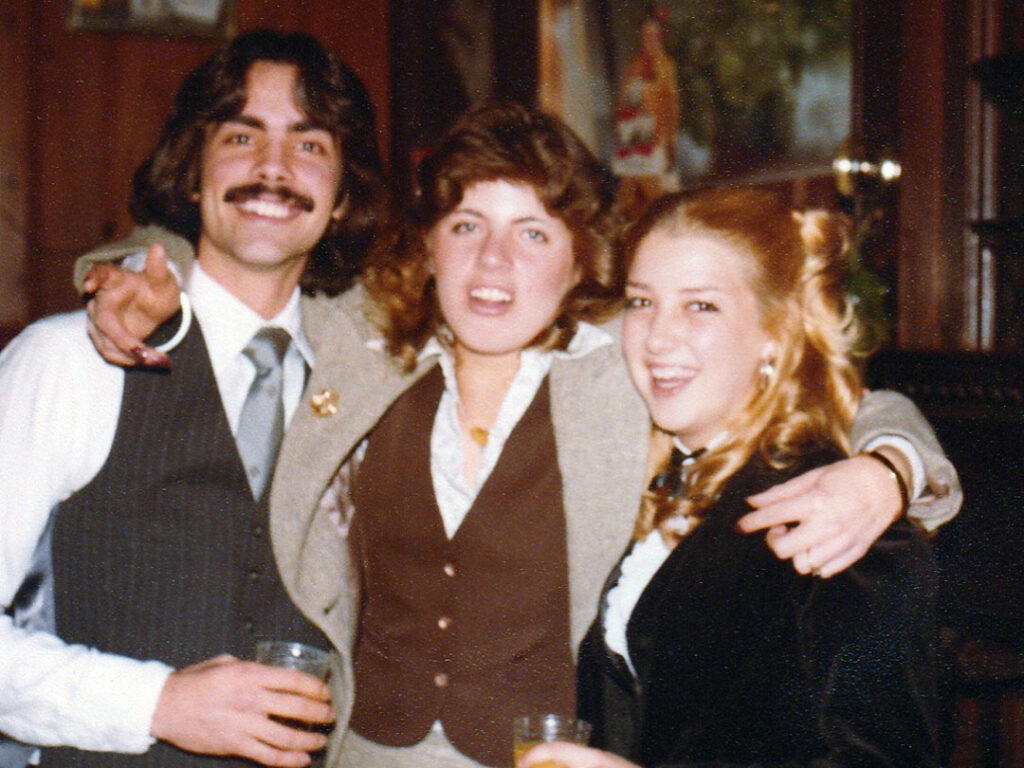
Joe compared pledging in the 1970s to some Navy traditions, but thought fraternity hijinks were more fun. He fondly remembers his experiences at Pilam, but lost contact with many brothers over the years. It’s something he hopes to rectify.